
The current total installed capacity of the seven manufacturers of remdesivir is 38.80 lakh vials per month, the Ministry of Chemicals and Fertilizers said in a statement.

The epidemiologist estimates that more than 60 per cent of China and 10 per cent of Earth's population are likely to be infected over the next 90 days with deaths likely in the millions.

The correction seen in the stock markets thus far is insufficient and there are significant downside risks, given the way macroeconomic data is shaping up, a Nomura equity strategist said on Thursday. "The markets are trying to look through the current stress we see in the macros. There are potential risks to the market. "Our estimates assume no major impact on growth and earnings. "The market should have been at least 5 per cent lower than it is now.
Once a difficult market to crack, in recent years, China has relatively opened up its drug market, enacting reforms and speeding up approval time.
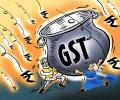
The Centre is looking to convene a meeting of the all-powerful Goods and Service Tax Council in early January. The meeting is likely to focus on rectifying the inverted duty structure for a few more items and will also serve as a platform for pre-Budget discussions between Union Finance Minister Nirmala Sitharaman and state finance ministers, Business Standard has learnt. "The current Winter Session of Parliament ends on December 23, followed by the Christmas-New Year period. "After that we would like to have a meeting of the GST Council, depending on whether there can be a quorum," a top government official said.

'We would like to develop Andhra Pradesh into a logistics hub not only for India, but also for South Asia.'

'The idea is to invest where there is opportunity.'
India's exports rose by 22.36 per cent to $33.81 billion in February on account of healthy growth in sectors like engineering, petroleum and chemicals, even as the trade deficit widened to $21.19 billion, according to preliminary data released by the commerce ministry on Wednesday. Imports during the month too jumped by about 35 per cent to $55 billion, with inbound shipments of petroleum and crude oil surging 66.56 per cent to $15 billion. The trade deficit -- the difference between imports and exports -- stood at $13.12 billion in February 2021.

Seven Indian Institutes of Technology -- IIT-Madras, IIT-Bombay, IIT-Delhi, IIT-Kanpur, IIT-Kharagpur, IIT-Roorkee and IIT-Guwahati -- figured in the top 10 in the overall rankings.

India imported goods worth $4.23 billion in June from sanctions-hit Russia, up 6.8 times as compared to last year, as demand for shipments of crude oil grew at the fastest pace during the month. Crude oil worth $3.02 billion was imported in June, which translates into a share of 71 per cent of the total imports from Russia, commerce and industry ministry data showed. Similarly, during the April-June quarter, India's imports from Russia were valued at $9.27 billion, up 369 per cent on year.

Starting your day with breakfast cereals or granola bars is something diabetic patients should totally avoid.

Covaxin is being indigenously developed by Bharat Biotech in collaboration with the Indian Council of Medical Research (ICMR).

Online travel portals and airlines say the demand from companies is being led by essential services sectors like pharmaceutical, oil and gas, and power.

Drug firm MSD has decided to enter into voluntary licensing agreements for investigational oral antiviral drug candidate 'Mmolnupiravir', which is being studied for the treatment of Covid-19, with Indian drug firms Sun Pharma, Cipla, Dr Reddy's, Emcure Pharma and Hetero Labs, its Indian arm said on Tuesday.

Indian Council of Medical Research had also recommended the use of hydroxychloroquine for treating healthcare workers handling suspected or confirmed coronavirus cases and also the asymptomatic household contacts of the lab-confirmed cases.

Wang Guangfa, a respiratory expert from Peking University First Hospital, warned that Beijing may experience a spike in severe COVID-19 cases over the next fortnight.

As many as 20 central public sector enterprises and their units are at various stages of strategic disinvestment, while six are being considered for closure or are under litigation, Minister of State for Finance Anurag Singh Thakur said on Monday.
Benchmark equity indices Sensex and Nifty pared their early gains to close nearly 1 per cent lower on Monday as surging oil prices played spoilsport amid prolonged Russia-Ukraine war. The 30-share Sensex plunged by 571.44 points or 0.99 per cent to settle at 57,292.49. During the day, it tanked 634.85 points or 1.09 per cent to 57,229.08. The broader NSE Nifty declined by 169.45 points or 0.98 per cent to finish at 17,117.60. Among Sensex constituents, Power Grid, Asian Paints, UltraTech Cement, Nestle, Hindustan Unilever Limited and HCL Technologies were among the major laggards.

Once stability returns to the secondary market, companies that have obtained approval from Sebi will start tapping the market.
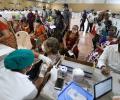
Sputnik V is already approved in India and Sinovac is unlikely to come in as it does not meet the criteria.

Equity benchmark Sensex rallied 936 points on Monday, helped by heavy buying in banking and IT counters along with decline in oil prices amid hopes of headway in renewed diplomatic talks between Russia and Ukraine. A fresh round of talks is expected on Monday between Ukrainian and Russian officials. Rising for the fifth straight session, the BSE Sensex jumped 935.72 points or 1.68 per cent to settle at 56,486.02.
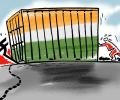
The country's exports rose by 23.69 per cent to $34.06 billion in January on healthy performance by engineering, petroleum and gems and jewellery segments even as trade deficit widened to $17.94 billion during the month, according to provisional data of the commerce ministry. Imports in January grew by 23.74 per cent to $52.01 billion, the data, released on Tuesday, showed. Trade deficit widened to $17.94 billion during the month as against $14.49 billion in the same month last year.

Patients and pregnant women, people out to buy essential items, and those travelling to or from railway stations, bus stops and airports will be exempted from the night curfew that kicks in at 11 pm on Monday due to rising COVID-19 cases in Delhi, according to a DDMA order.

Despite unprecedented levels of uncertainty in Samvat 2077, investors have little to complain about on the returns front. The BSE Sensex delivered returns of 38 per cent in this period, while the Nifty registered a return of over 40 per cent. As is the case in bull markets, companies in the small- and mid-capitalisation basket outperformed the benchmarks, with returns almost twice those of frontliners.
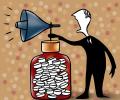
Medicine sales grew at a fast clip in smaller cities like Madurai, Meerut, Agra, and Varanasi in the last 12 months. The domestic pharmaceutical market, overall, has grown 12.3 per cent in this period, according to data from IQVIA MAT for April. MAT refers to the moving annual turnover or the turnover of the last 12 months. The data further showed that the top 30 cities contributed around 32 per cent to sales.

As India wages a daily battle against the second wave of coronavirus cases, a Mumbai clown turns Covid Warrior.
With all major US export-oriented drug manufacturing plants in the country up for inspection in 2022, some estimates peg that at least 20-30 per cent of the new product launches lined up for the US will be subject to on-site inspection by the US Food and Drug Administration (USFDA). The last two years saw limited physical inspections due to travel restrictions during the pandemic. "Pre-Covid, the frequency and number of inspections of manufacturing plants in India by USFDA had increased significantly," analysts from ICICI Securities Research noted. "With growing ANDA filings, especially for complex products. "We expect this trend to return with the environment normalising," analysts from ICICI Securities Research noted.
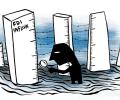
Total foreign direct investment into India rose 2 per cent to the "highest ever" $83.57 billion in 2021-22 on account of various measures like policy reforms and ease of doing business taken by the government, the commerce and industry ministry said on Friday. Total FDI comprises equity inflows, reinvested earnings and other capital. In 2020-21, the inflow stood at $81.97 billion. It was $74.39 billion in 2019-20 and $62 billion in 2018-19. "India has recorded the highest ever annual FDI inflow of $83.57 billion in 2021-22," the ministry noted in a statement.

'We would love to have more players entering the market because that is how the business will grow.'

Food (ahara) and lifestyle (vihara) have a major impact on the health of your heart.

The share of total health expenditure as part of the gross domestic product (GDP) went down to 3.3 per cent in 2017-18 from 3.8 per cent in the previous two years, according to the national health account data released on Monday by the health ministry. The share of government expenditure as part of total expenditure as well as GDP has gone up from from 3.78 per cent to 5.12 per cent between 2013-14 and 2017-18, which could also explain a decline seen in out of pocket expenditure in 2017-18. Health ministry also emphasised the increase in the government health expenditure as part of the total GDP from 1.15 per cent in 2013-14 to 1.35 per cent in 2017-18.
India lost its competitive advantage as China gave fiscal benefits to its local manufacturers. Besides, recent policy flip-flops have, however, dented India's image as the 'pharmacy of the world'.

The guidelines listed several services including government and private offices that will be out of bounds during the period, while exempting establishments such as hospitals, ration shops, dairies, banks, insurance offices, and print and electronic media. Delivery of all essential goods including food, pharmaceuticals, medical equipment through e-commerce has also been exempted from the purview of the lockdown.

Human presents an ugly truth -- that some people need to die a painful death in order to facilitate the process of finding a cure for deadly diseases, observes Utkarsh Mishra.

Even as the bilateral relationship between the two neighbouring countries remains hostile, there is growing coordination between India and Pakistan on one multilateral forum - the World Trade Organization (WTO). Both countries have made two joint submissions at the WTO as co-sponsors in the past two months. In June, Pakistan joined India, Cuba, and 44 African countries, seeking sufficient flexibility in intellectual property rights for developing countries to fight the Covid-19 pandemic.
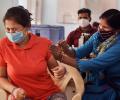
Earlier in the day, Delhi Chief Minister Arvind Kejriwal also wrote to Prime Minister Narendra Modi over vaccine shortage, saying the Centre should share the vaccine formula of the two manufacturers with other capable pharmaceutical companies to scale up production in the country.
Shipments from Russia rose nearly 33 per cent to $1.1 billion in March from $831.17 million in the previous month, which was when the country mounted aggression on Ukraine and faced sanctions from Western nations, the data accessed by Business Standard shows. Growth in imports was largely on account of oil, people aware of the matter said. The Department of Commerce is learnt to have written to the Ministry of Petroleum and Natural Gas (MoPNG), seeking details of imports, including the payment mechanism, which India has not made public.
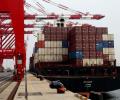
On the back of rising crude oil purchases, India's bill for imports from sanctions-hit Russia jumped 3.5 times in a year in April to $2.3 billion, showed data from the commerce ministry. In April, India's crude oil imports from Russia were valued at $1.3 billion, 57 per cent of India's total inbound shipments from Russia. Other major imported items during the month included coal, soybean and sunflower oil, fertilisers, and non-industrial diamonds. That month, Russia was also the fourth-largest crude petroleum supplier to India, after Iraq, Saudi Arabia, and the United Arab Emirates (UAE).

NTPC was the top gainer in the Sensex pack, rising around 4 per cent, followed by Bajaj Finserv, SBI, Bajaj Finance, Tech Mahindra, Dr Reddy's and Tata Steel.

India will export anti-malarial drug hydroxychloroquine, high in demand globally, only to foreign governments and not to private companies, as the product is under prohibited or banned category of exports, sources said. Although exports of this medicine is completely banned, India has decided to export this anti-malarial drug in sync with its global commitment to deal with the coronavirus pandemic.
